Case Study
Samsung Electronics NZ
Increasing NZ traffic 64%, by redesigning existing workflows and partnerships
Role
UX Consultant, Design Engineer
Period
August 2020 → November 2020
Categories
Challenge
- Every year, Samsung Electronics NZ had multiple product launches. Every retailer needed different deliverables for their online stores. This took up a lot of time and money to complete.
- Every online retailer had different standards, deliverable requirements and working styles when it came to new product launches.
Response
- I designed then developed a new marketing design system / template library that was easy to use and maintain for the team, speeding up time to market 4X
- Achieved cost savings with the new template library by reducing work required for each new product launch
- New system resulted in a 64% increase in traffic to redesigned properties and a subsequent increase in sales
About the project
Samsung Electronics NZ sells various electronics like smartphones, tablets, TVs, and home appliances. They also have a B2B division. While contracting for Cheil New Zealand, I improved design processes for them, making projects between Samsung, Cheil and retail partners more efficient and effective.
In late 2020, I was approached to work on a project for Samsung Electronics NZ. They were looking to improve their online presence and sales in New Zealand. I was brought in to help with the user experience of their online presence.
To get started, I reviewed their existing workflows and processes, particularly around new product launches. I found that they were spending a lot of time creating different unique deliverables for each retailer per specific product.
Because each retailer had unique requirements for the materials they needed, the team found themselves spending excessive time creating and managing various versions of deliverables. This resulted in significant time wastage.
Picture this: a new device is set to launch soon. However, the promotional materials the team receives for this launch are disjointed. They include massive Photoshop files, each several gigabytes in size, along with partially completed Magento templates provided by an overseas development team, just seven days before the launch date.
We would need to then refactor and reformat the content into various file types to suit each individual storefront template. This was for every individual retailer that was involved in selling the product in New Zealand.
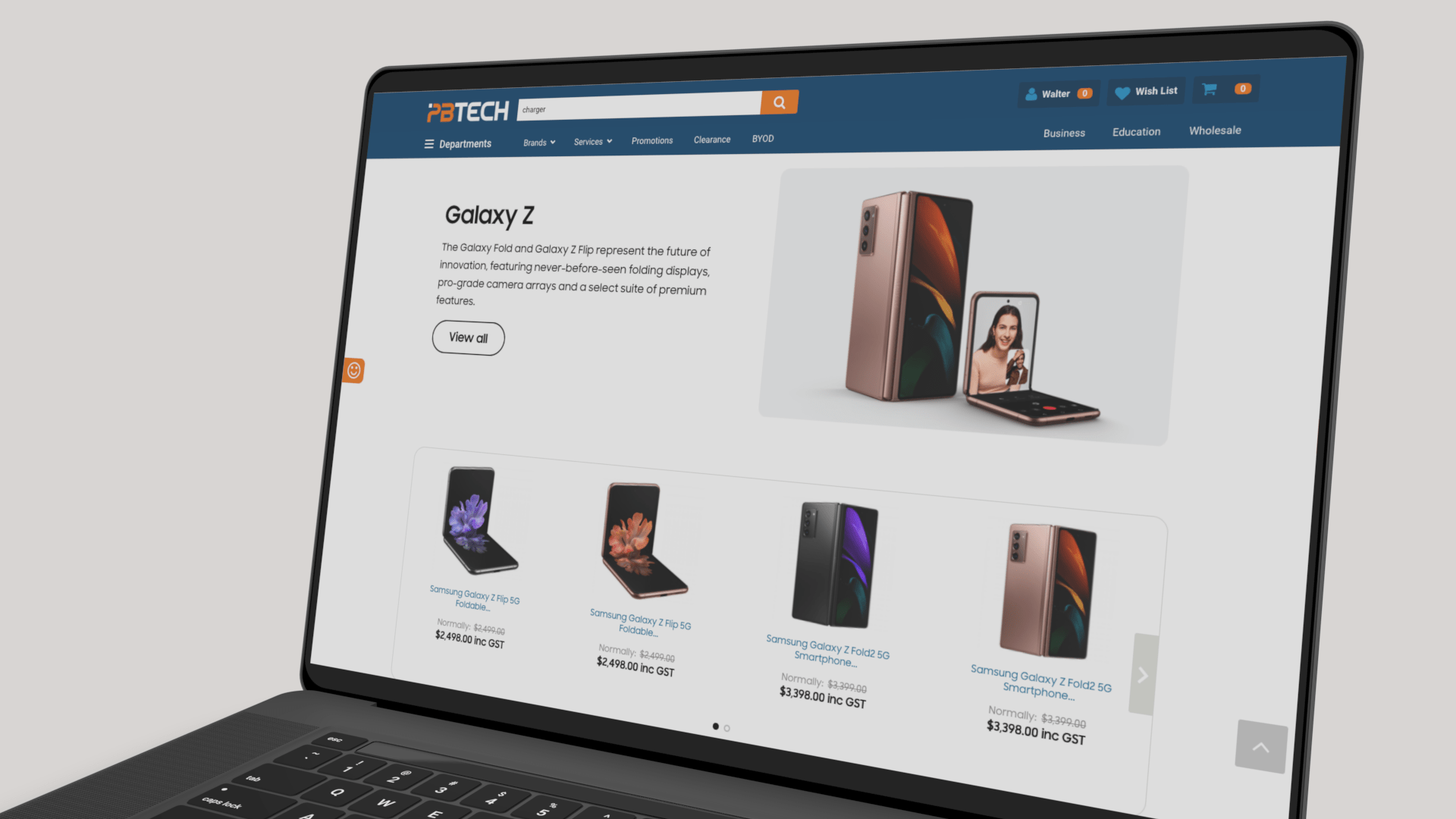
Every retailer had something different. Some were using Shopify, some were using bootstrap and ASP.NET, some were using Magento, and some were using custom CMSs.
I saw this as absurdly inefficient and a massive waste of time. In response, I designed a new marketing design system and template library that was easy to use and maintain for the team, that conformed to global design system standards from HQ.
I wrote a prototype template with basic HTML and CSS, with a focus on semantics, accessibility, and conformance to the marketing design system throughout the process. When I presented this prototype to the wider team, they were impressed and I got the green light to continue.
After negotiations with our retail partners, we got buy-in for them to use our code. They would implement the template and design system we created for every new product launch. This was a massive win for us, as it meant we could now deliver a consistent experience across all of our retail partners, and we could do it in a fraction of the time it used to take.
Impact
Increase in web traffic to redesigned properties
Faster time to market for new product launches in NZ
Cost savings by reducing hours required for each new product launch